Search
KNOWLEDGE BANK

Articles on Digital Marketing

We write about what we do every day: SEO, AI-SEO, paid advertising, social media, data, and strategy. The more you know, the better our collaboration will be.

New Articles

In practice, server-side tracking functions as an extension of your existing client-side tracking. It adds an extra layer where your own server also forwards data to your analytics and advertising platforms, in parallel with what’s already happening in the browser. When we talk about "your own server," we’re rarely referring to a physical server that you have to run from scratch. It’s typically set up via a cloud solution like Stape or Google Cloud Platform. The advantage is more complete and reliable data, because this setup isn’t affected by ad blockers and short cookie lifetimes in the same way as purely client-side tracking. Below, we’ll go over the difference between client-side and server-side tracking, what you gain from it, and how it interacts with consent.
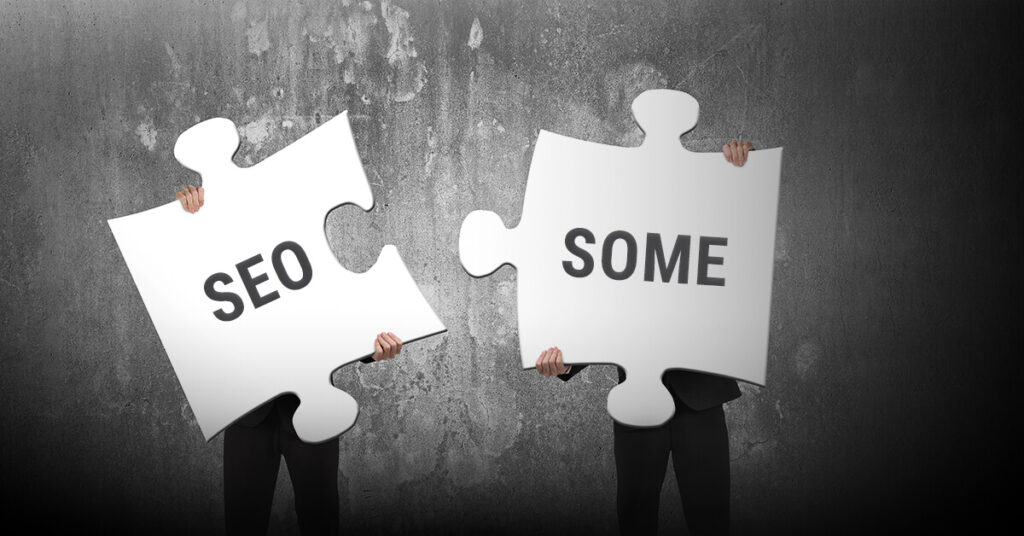
SEO and social media (SoMe) are often seen as two separate marketing disciplines with their own value-adding objectives. SEO is a long-term strategy based on keywords and technical optimizations, whereas social media is often based on short-term experiments and live data. But did you know that if you combine your SEO and social media strategy, you can achieve even better results?
Black Friday is just around the corner and many B2B companies face the same challenge every year: most don't have a strategy or thought about how to take advantage of this event. Many B2B marketers think it's a closed party for B2C marketers, but in fact, a study by Danish Industrythat several B2B companies have managed to turn the day to their advantage.
Cookie Information is a Danish Consent Management Platform (CMP) that helps websites collect, store, and document users’ consent to cookies and trackers. It scans the website, displays a cookie banner, and generates a cookie declaration so you can comply with the requirements of the GDPR and the Danish Cookie Order. Whether Cookie Information is the right choice over an alternative like Cookiebot depends on your website’s market, language requirements, and existing setup. This article explains how it works, how to connect it to Google Tag Manager and Consent Mode v2, and when it’s a better fit than the alternatives.
Cookiebot is a Consent Management Platform (CMP) from Usercentrics that helps websites collect, store, and document users’ consent to cookies and trackers. It automatically scans the website for cookies, displays a cookie banner, and generates a cookie policy so you can comply with the requirements of the GDPR and the Danish Cookie Notice. Cookiebot is available in a free tier and paid plans, and which option is sufficient depends on the size of the website and the number of subpages. This article explains how Cookiebot works, how to integrate it with Google Tag Manager and Consent Mode v2, and how it compares to Cookie Information.
A dashboard without a clear purpose is built once and then forgotten. It ends up somewhere between irrelevant and useless, because no one really knows what question it’s supposed to answer. A good marketing dashboard, therefore, doesn’t start with data or a fancy tool, but with a “why.”.
Claude and ChatGPT both search the web and both write in Danish, but they choose sources differently. Claude searches only when the question requires up-to-date knowledge and cites few sources. ChatGPT searches more often and cites more sources. This guide compares models and prices as of September 2026, explains when the two assistants fall short, provides InboundCPH’s Claude test protocol with 10 Danish business questions, and shows how ClaudeBot, Claude-User, and Claude-SearchBot should be listed in robots.txt if you want to be cited.
Google has never published a list of ranking factors, but two documents and a number of statements make it possible to distinguish between what has been confirmed and what has been observed. Here are the 10 ranking factors that will matter most in 2026, each with its status and recommended action, the 5 citation factors that determine whether Google AI and ChatGPT will cite you, a factor map showing the overlap, and a prioritized list for Danish B2B companies.