Search
KNOWLEDGE BANK

Articles on Digital Marketing

We write about what we do every day: SEO, AI-SEO, paid advertising, social media, data, and strategy. The more you know, the better our collaboration will be.

New Articles

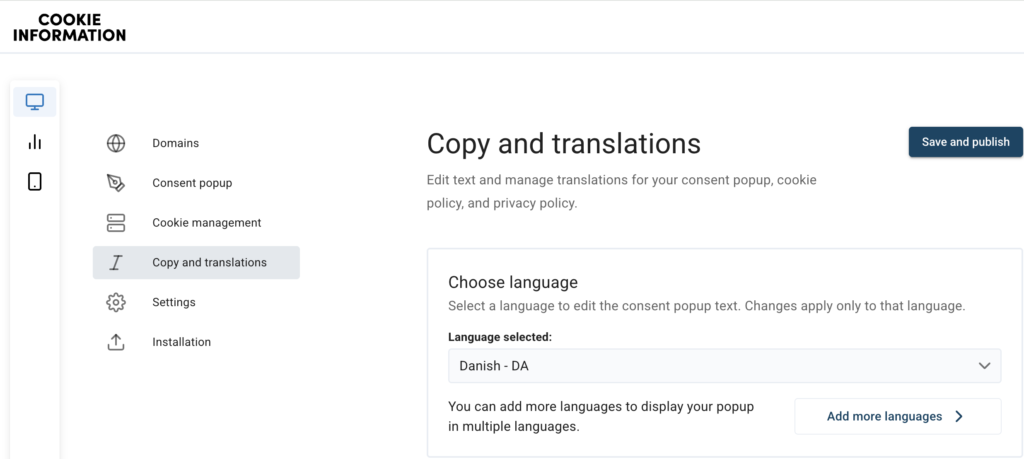
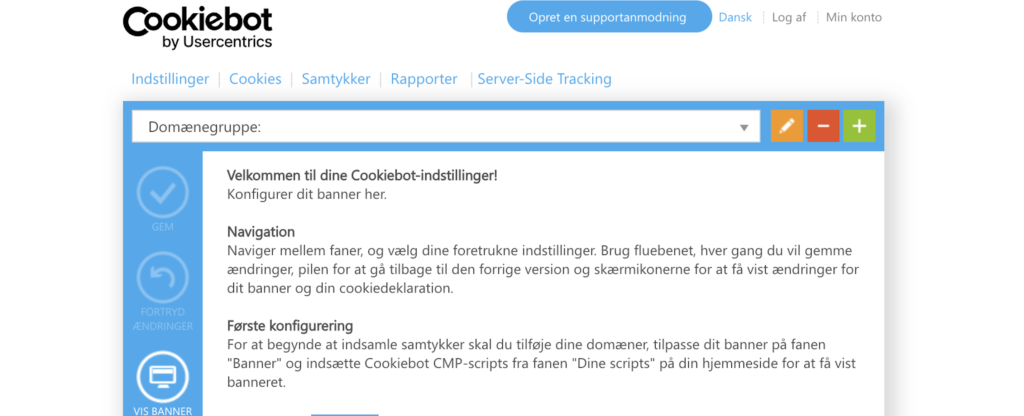
Nervousness is rising among Danish companies due to developments in data law. What to do now that Analytics may become illegal in the EU and data rules are being tightened further. In a new ruling, the Austrian Data Protection Authority writes that Google Analytics does not comply with the GDPR rules in the EU. So far, the Danish Data Protection Agency has stated that they are closely reading the ruling before issuing further guidance. Regardless of the ruling, the importance of legal and effective data collection does not change. That's why we're working on solutions that can not only act as a fallback solution to a possible ruling, but also be seen as a valuable upgrade to current setups.
SEO and social media (SoMe) are often seen as two separate marketing disciplines with their own value-adding objectives. SEO is a long-term strategy based on keywords and technical optimizations, whereas social media is often based on short-term experiments and live data. But did you know that if you combine your SEO and social media strategy, you can achieve even better results?
Black Friday is just around the corner and many B2B companies face the same challenge every year: most don't have a strategy or thought about how to take advantage of this event. Many B2B marketers think it's a closed party for B2C marketers, but in fact, a study by Danish Industrythat several B2B companies have managed to turn the day to their advantage.
Link building is no longer just about links. In 2026, it’s about building the authority and credibility that drive visibility in both Google’s organic results and AI-generated answers from ChatGPT, Perplexity, and AI Overviews. This guide explains what sets good link building apart from bad and provides you with a concrete strategy to get started.
GEO (Generative Engine Optimization) is the discipline of optimizing content so that generative AI engines such as ChatGPT, Perplexity, and Google AI Overviews cite and recommend it. The concept originates from an academic paper on arXiv published in November 2023. Whereas traditional SEO aims for a spot among the ten blue links, GEO aims to be cited in the single answer generated by the AI.
A SaaS buyer has often tried your product before a salesperson gets involved. This changes what SEO needs to deliver. Here, we’ll explore how product-led growth, alternative landing pages, and integration searches are shifting priorities, and what sets SaaS SEO apart from standard B2B SEO.
By the time a B2B buyer finally reaches out, most of the decision has usually already been made. The list of suppliers has been drawn up, the requirements have been set, and the conversation mostly serves to confirm a choice that was made months earlier, when no salesperson was in the room. This process is determined by who the buyer encounters as she researches, compares options, and consults with colleagues. B2B SEO is about being one of the sources that shapes that choice—from the moment the first technical questions are asked until the decision is made. Here, the few relevant visitors count more than the many random ones, and this guide shows you how to build that visibility on both Google and AI assistants.
Answer Engine Optimization (AEO) is the discipline of optimizing content to be selected as an answer in answer engines—that is, featured snippets, “People Also Ask,” voice answers, and AI-generated answers. AEO increases the likelihood that your content will be presented directly as the answer, so that the user no longer needs to click further. It is not a substitute for SEO and cannot guarantee a specific ranking as an answer, as it is built on the same foundation as traditional search engine optimization. This guide explains what AEO is, how it differs from SEO and GEO, and how to implement it in practice.
Topical authority is the trust a search engine can place in a website when the site covers a specific topic in both depth and breadth. Strong topical authority improves the chances that the site’s pages will rank for multiple related searches within that topic. It is not an official Google score, but rather an umbrella term for how topic coverage and semantic signals are evaluated. Topical authority is built over time through topic focus, a pillar and cluster structure, internal linking, and subject-matter depth. This article explains what topical authority is, how it differs from domain authority, and how to build it.
AI-centric SEO strategy
Whitepaper
- Learn more about the future of SEO
AI-centric SEO strategy
Whitepaper